War On Iran: Israel’s Iron Grip on U.S. Military Policy
The brazen assault on Iran, initiated by the United States and Israel on February 28, 2026, is proof-positive of nothing less than the abject surrender of American sovereignty to Israeli diktats. This is no partnership of peers; it is yet another stark reminder of how Tel Aviv’s belligerent agenda has hijacked Washington’s war machine, forcing American blood and treasure into the service of foreign imperatives. As laid bare in the Bloomberg opinion column “Iran War: America Second, Israel First?,” Secretary of State Marco Rubio’s unguarded admissions stripped away the facade, exposing a U.S. policy reduced to preemptively cleaning up the catastrophes anticipated from Israel’s aggressive forays. This capitulation not only betrays the principles of American independence but has unleashed a torrent of destruction across the Middle East, killing U.S. service members, pulverizing Gulf Cooperation Council (GCC) economies, shredding diplomatic fabrics, and entrenching a cycle of chaos that serves no one but Israel, as well as the military industrial complex that Zionism feeds.
The onslaught erupted with “surgical strikes” on Iranian installations, peddled by the Trump administration as indispensable countermeasures to Tehran’s missile arsenal and expansionist designs. Yet Rubio’s March 2, 2026, press conference pierced this thin scrim. Rubio inadvertently confessed that the U.S. attacked first only because intelligence forewarned of Israel’s impending blitz, which would inexorably draw Iranian fire upon American positions. As the Bloomberg piece incisively quotes: “We knew that there was going to be an Israeli action, we knew that that would precipitate an attack against American forces, and we knew that if we didn’t preemptively go after them before they launched those attacks, we would suffer higher casualties.” Here, the so-called “imminent threat” evaporates into thin air—not some spontaneous Iranian onslaught, which no one ever foresaw, but the predictable backlash to Israel’s provocation. In this tawdry script, Benjamin Netanyahu emerges as puppeteer, yanking the strings on matters of American life, death, and national destiny, while the American colossus stumbles behind like an obedient one-eyed giant.
This Israeli dominion over U.S. strategy constitutes a grotesque inversion of priorities, where America’s might is harnessed not for self-defense but to insulate an “ally” from the fallout of its own criminal bellicosity. By syncing operations to Israel’s desiderata, Washington has forfeited its prerogative in the gravest of deliberations, permitting a distant regime to chart the course toward the Armageddon desired by both the “Christian Zionists” in the Trump administration and and the Jewish Zionists inflecting Israeli policy.
Senator Angus King’s blistering query in the subsequent Pentagon grilling, as spotlighted by Bloomberg, cuts to the bone: “Have we now delegated the most solemn decision that can be made in our society, the decision to go to war, to another country?” His verdict on Rubio’s gaffe as “breathtaking” nails the outrage of this outsourcing. Trump’s feeble retort—“If anything, I might have forced Israel’s hand”—and Rubio’s frantic retraction, parroting that the strikes were predestined and Trump’s brainchild, merely compound the farce. These contortions cannot conceal the damning essential message: U.S. firepower was mobilized on Israel’s cue, betraying a supposed alliance as a relationship of subjugation.
Property Destruction and Lost Lives
An orgy of destruction has ensued, including the inaugural-day bombing of the Shajareh Tayyebeh girls’ elementary school in Minab, southern Iran’s Hormozgan province. In a disgraceful flouting of international humanitarian law, this barbaric assault slaughtered over 170 innocent civilians, predominantly young schoolgirls aged 7 to 12, emblematic of the callous disregard for civilian life in a campaign masquerading as precision warfare. The Guardian reports that U.S. military investigators point to the U.S. military as the likely culprit in the school bombing. As such, the American military has been directly enlisted in Israel’s wanton slaughter of children.
The wreckage from this Israel-orchestrated debacle manifests in a maelstrom of ruin that has eviscerated the GCC states and poisoned regional bonds. Ignited by joint U.S.-Israeli salvo, Iran’s vengeful barrages have rained hellfire on all six GCC members—Saudi Arabia, the United Arab Emirates (UAE), Qatar, Bahrain, Kuwait, and Oman—demolishing bases, infrastructure, and vital economic lifelines. In its opening retaliatory gambit, Iran unleashed swarms of drones and missiles, with the UAE absorbing the brunt: over 150 missiles and 500 drones hammered Dubai and Abu Dhabi, crippling the globe’s premier airport, torching opulent hotels, and toppling skyscrapers in a spectacle of carnage that has forever tarnished the emirates’ veneer of inviolable prosperity. Saudi Arabia endured intensified drone incursions on March 2, shuttering the Ras Tanura refinery—its oil behemoth—and throttling global energy flows into turmoil. Qatar’s Ras Laffan LNG hub reeled from impacts, Bahrain’s airport and a moored tanker fell prey to aerial predators, Kuwait’s terminals quaked under assault, and Oman’s Duqm port succumbed to the onslaught, illustrating the war’s insidious sprawl.
Beyond the rubble, the toll exacts a savage economic and human levy. Gulf interceptors blunted many missiles, but the drone hordes slipped through, sowing pandemonium. The virtual blockade of the Strait of Hormuz has strangled 20 percent of the world’s oil supply, catapulting prices skyward and fueling inflationary infernos afar. Aviation hubs in Dubai, Abu Dhabi, and Doha lie paralyzed, with myriad flights grounded and supply chains in tatters. The GCC’s allure as bastions of stability—for investors, tourists, and expatriates—lies in shambles, besieged by visions of urban apocalypse that could repel capital and talent for years. Soaring insurance premiums, disrupted maritime routes, and the psychic scars on civilians gazing upon smoldering metropolises portend a protracted hemorrhage of vitality.
Israel itself has not escaped unscathed, reeling from Iranian counterstrikes that have pierced its vaunted Iron Dome and inflicted unprecedented devastation on civilian and military targets alike. Tehran launched over 500 ballistic missiles and 2,000 drones in the initial waves, overwhelming defenses and striking deep into Israeli territory. Tel Aviv’s skyline was scarred by impacts on high-rises and government buildings, while Ben Gurion Airport suffered runway craters and terminal fires, halting all flights and stranding thousands. Military installations like Nevatim Airbase were hammered, with fighter jets destroyed on the tarmac and hangars reduced to rubble, crippling Israel’s aerial response capabilities. Haifa’s oil facilities burned under drone attacks, and residential areas in Jerusalem and Beersheba reported civilian casualties from shrapnel and collapsed structures.
The war has extended directly to American assets in the region, with Iranian reprisals battering U.S. military outposts and inflicting billions in losses that underscore the folly of this outsourced military decision-making. Satellite imagery and verified reports reveal strikes on at least seven U.S. sites, targeting communication hubs, radar arrays, and command centers critical to coordination. In Iraq, Al Asad Airbase endured a barrage of over 100 missiles, destroying hangars, barracks, and fuel depots, resulting in dozens of U.S. casualties, possibly brain injuries, and forcing evacuations amid fires that raged for hours. Syrian bases like Conoco and Tanf faced similar onslaughts, with drone swarms overwhelming defenses and demolishing key infrastructure, disrupting supply lines and command operations. In the Gulf, strikes on U.S. naval assets and facilities in Bahrain and Qatar compounded the damage, sinking support vessels and igniting ammunition stores, with repair costs estimated in the tens of billions with long-term operational impairments. The U.S. lost an estimated two billion worth of military assets in the first four days of combat alone. Compounding the irony, many of these potential U.S. targets were only stationed in the region due to Israel’s insistent demands for bolstered American military presence—to shield Tel Aviv from perceived threats, including deployments of assets like aircraft carriers, missile defense systems, and troops explicitly positioned to defend Israeli interests. This entanglement further undermines Rubio’s spurious claims of Iranian retaliation as an “imminent threat,” revealing instead that U.S. vulnerabilities stem directly from Washington’s subservience to Israeli security imperatives, turning American forces into sacrificial pawns in a foreign power’s game.
The carnage inflicted upon American forces in this Israel-dictated fiasco has already claimed six U.S. service members, all slain in a single Iranian drone strike on a makeshift operations center at Kuwait’s Shuaiba port on March 1, 2026—a grim tally that includes Capt. Cody A. Khork, 35; Sgt. Nicole M. Amor, 39; Sgt. Declan J. Coady, 20; Sgt. Noah L. Tietjens, 42; Maj. Jeffrey R. O’Brien; and Chief Warrant Officer, Robert M. Marzan. With at least 18 more gravely wounded and officials bracing for further fatalities, these losses underscore the perilous price of subordinating U.S. lives to Tel Aviv’s aggressive whims.
The Economic Costs of the War
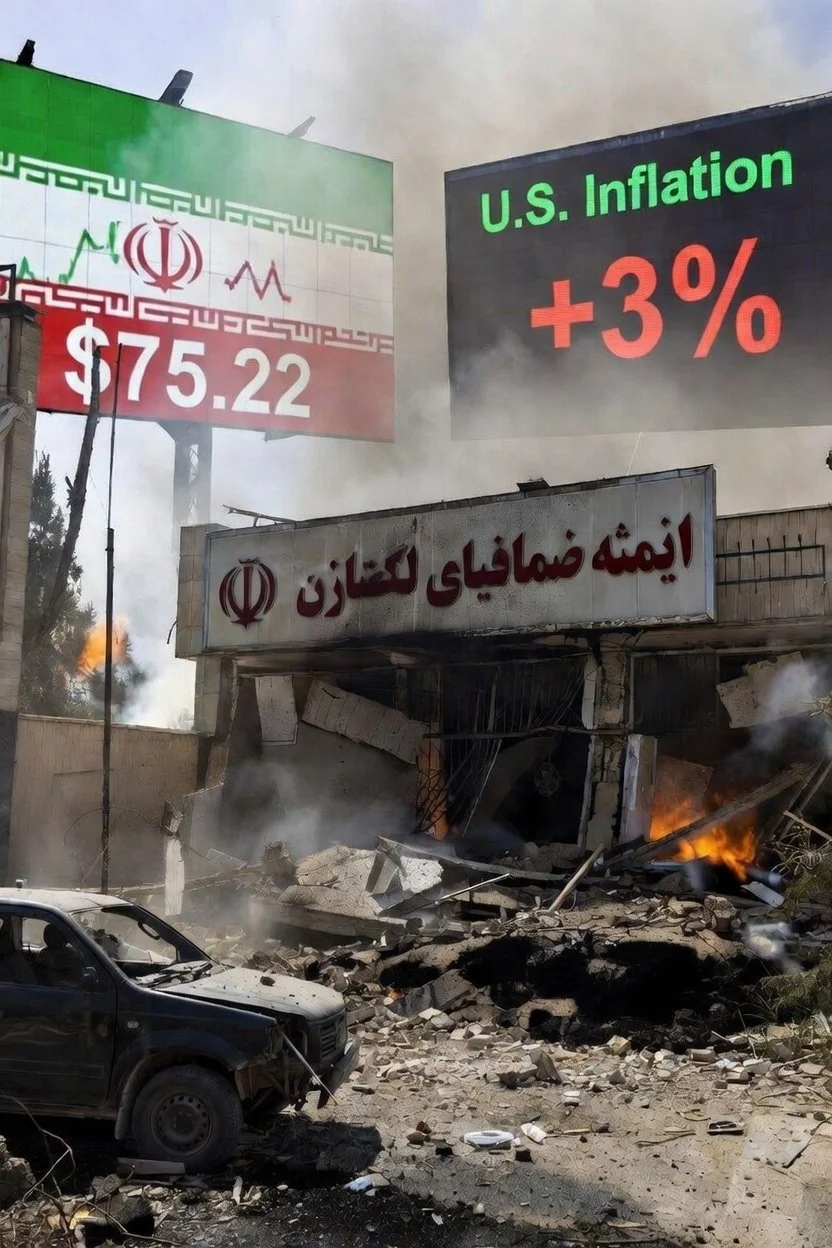
The economic fallout is staggering, with stock markets plummeting, tourism evaporating, and reconstruction costs projected to exceed hundreds of billions, all while public morale frays under the constant wail of sirens.
Should this savagery extend for the promised four weeks, the financial burden on U.S. taxpayers will already be staggering, with direct military costs projected at $40 billion to $95 billion (with a baseline of $65 billion), encompassing operational expenditures, munitions replenishment, equipment losses, and emergency funding—funds siphoned from American taxpayers to fuel a war of Israeli instigation—while broader economic impacts could add another $50 billion to $210 billion (with a baseline of $115 billion) from trade disruptions, energy market volatility, and financial instability. Meanwhile, Press Secretary Caroline Leavitt has already stated that the war may extend to six weeks. Oil prices have already surged over 5% to above $90 per barrel and could exceed $100 if the war is prolonged, driving up gas prices by more than 30 cents to $3.32 per gallon nationwide and climbing, potentially pushing U.S. inflation above 3% for the first time since early 2024.
In the final reckoning, Rubio’s unintended revelations and the ensuing apocalypse affirm Israel’s vise-like command over U.S. militarism. Only by shattering these chains of dependency can Washington extricate itself from the vortex of proxy wars, honoring the ethos of liberty over the siren calls of Israeli imperial entanglement.